

Resilient Tree Structure vs. Weak Tree Structure: Recognizing Differences and Identifying Concerns
- alexcraig45
- Jul 23, 2023
- 3 min read
Updated: Jan 7, 2025

The magnificent beauty and ecological significance of trees often captivate our admiration. However, not all trees possess the same resilience and structural integrity. Some trees boast robust, well-anchored structures, while others exhibit weaker unions that can pose risks to safety and property. In this blog post, we will explore the differences between resilient and weak tree structures, explore how various tree species exhibit both forms, and understand when to be concerned about the health and stability of our trees.
Resilient Tree Structure:
Trees with resilient structures demonstrate several key characteristics that contribute to their stability and longevity. A strong, central leader—the main trunk extending upwards—is a hallmark of resilient trees. This central leader provides a solid backbone for the tree and helps distribute weight evenly among branches. Furthermore, resilient trees often feature well-spaced and well-attached lateral branches. These lateral branches grow at wide angles, allowing for better weight distribution and reduced stress on individual branches. Additionally, the presence of a sturdy root system further contributes to the overall resilience of the tree.
Weak Tree Structure:
Conversely, trees with weak structures exhibit characteristics that increase the likelihood of branch failure and instability. One common feature of weak tree structures is co-dominant stems. Co-dominant stems occur when two or more branches grow parallel and are similar in size, leading to tight attachments and included bark. This weak attachment can result in the branches rubbing against each other and creating points of weakness that are susceptible to splitting or breaking during storms. Additionally, weak tree structures may show signs of leaning, irregular growth patterns, or excessive deadwood.
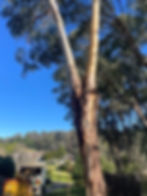
Pic: A bi-furcated Euc sp with poor structure and attachment.
Different Species, Different Forms:
It is essential to recognize that tree structures can vary significantly among species. Some tree species naturally possess more resilient structures, while others are prone to weak unions. For example, trees in the oak family (Quercus spp.) typically display strong, well-attached branches, making them less susceptible to breakage. On the other hand, some species like silver maples (Acer saccharinum) often develop co-dominant stems and weak branch attachments, requiring more vigilant inspection and care. We will be adding a blog with a list of weak and strong species soon! We will add the link here once we have posted it.
When to be Concerned:
Regular tree inspections are critical in identifying potential concerns and ensuring the safety of your property and surrounding areas. If you notice any of the following signs, it's essential to seek the expertise of a certified arborist:
Leaning or tilting: Trees that lean significantly may indicate compromised root systems or weak branch unions.
Cracks or splits: Visible cracks or splits in the trunk or branches are indications of structural weakness.
Excessive deadwood: Dead or decaying branches are more likely to break and should be pruned to reduce risks.
Co-dominant stems: Trees with co-dominant stems should be carefully inspected for signs of included bark and potential branch failure.
Visible signs of stress or disease: Trees showing signs of stress, such as wilting leaves or abnormal growth patterns, may have structural issues.
Understanding the differences between resilient and weak tree structures is crucial for ensuring the safety and longevity of our trees. While various tree species exhibit different forms of growth, regular inspections by certified arborists can help identify potential concerns and implement necessary care and maintenance. By being attentive to the health and stability of our trees, we can foster a safer environment and continue to appreciate the beauty and benefits these majestic organisms bring to our lives.